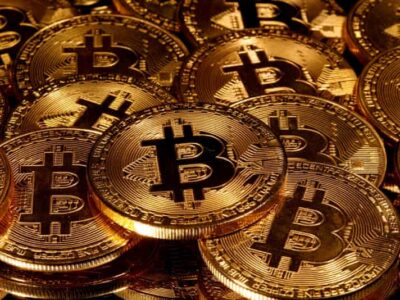
Bitcoin

Bitcoin: The Digital Phoenix Reshaping Global Wealth

Introduction: A New Dawn for Money

In the swirling currents of modern finance, Bitcoin has emerged not merely as a technological curiosity but as a profound reimagining of what money can be. Since its inception in 2009, Bitcoin has challenged entrenched economic structures, forcing both sceptics and believers to reckon with a world where value can exist without borders, banks, or the blessing of governments. What began as an experiment has matured into a cultural and financial phenomenon—one that embodies the spirit of digital resilience and self-sovereignty.

The Genesis of Bitcoin: From Crisis to Code

Bitcoin’s story is inseparable from the economic turmoil of the late 2000s. In the wake of the global financial crisis, trust in traditional banking institutions plummeted. Into this breach stepped Satoshi Nakamoto, a shadowy figure whose true identity remains unknown. With the publication of Bitcoin: A Peer-to-Peer Electronic Cash System, Nakamoto offered a radical proposition: what if people could transact directly, without relying on banks or governments? The first block—aptly named the Genesis Block—contained an embedded message referencing a newspaper headline about bank bailouts, a subtle but pointed critique of the centralised financial order.

Demystifying the Blockchain

At the core of Bitcoin lies the blockchain—a decentralised, transparent ledger that records every transaction ever made. Each block contains a bundle of transactions, cryptographically secured and linked to the block before it, creating an unbroken chain. This ingenious design solves the age-old double-spending problem that plagued earlier attempts at digital currency. Instead of a central authority verifying transactions, a network of miners competes to solve complex mathematical puzzles. The first to crack the code earns the right to add a new block, receiving freshly minted bitcoins as a reward. This process not only secures the network but also controls the issuance of new coins, mimicking the finite nature of precious resources like gold.

Scarcity and Value: Digital Gold for a Digital Age

One of Bitcoin’s defining features is its capped supply. Only 21 million bitcoins will ever exist. This programmed scarcity stands in stark contrast to fiat currencies, which can be printed at will by central banks. For many, this limited supply makes Bitcoin an attractive hedge against inflation and currency devaluation. Investors have even dubbed it “digital gold.” Unlike physical gold, however, Bitcoin is borderless, divisible, and easily transferable. In an increasingly digital world, these qualities give it an edge that has captured the imagination of both retail investors and large institutions.

The Many Faces of Bitcoin: Beyond Speculation

While stories of overnight millionaires and dramatic price swings often dominate headlines, Bitcoin’s significance runs deeper. It represents:

  • Financial Autonomy: Individuals in oppressive regimes or unstable economies use Bitcoin to preserve wealth and transact freely.

  • Innovation Catalyst: The success of Bitcoin sparked an entire ecosystem of cryptocurrencies and decentralised finance projects.

  • Community Empowerment: Grassroots movements and charities use Bitcoin to bypass restrictive banking systems and raise funds globally.

For example, in countries like Nigeria and Argentina, where local currencies can lose value overnight, Bitcoin has become a lifeline. Citizens use it to store savings, receive remittances, and even crowdfund protests, all beyond the reach of authoritarian controls.

Challenges on the Road: Obstacles and Critiques

Bitcoin’s revolutionary promise is not without its shadows. Critics raise valid concerns about:

  • Energy Consumption: The proof-of-work mining process demands immense computational power, leading to a large carbon footprint.

  • Volatility: Bitcoin’s price can swing wildly, making it risky as a day-to-day medium of exchange.

  • Regulatory Pressure: Governments wary of losing control over monetary policy have tightened regulations and, in some cases, banned Bitcoin outright.

Yet, the community continues to innovate. Projects like the Lightning Network aim to address scalability and transaction costs, while miners increasingly turn to renewable energy to power their rigs.

Institutional Embrace: From Fringe to Fortune

In its early days, Bitcoin was dismissed by many as a niche fascination for tech enthusiasts and libertarians. Today, the landscape has transformed. Major companies, including Tesla and MicroStrategy, hold billions of dollars in Bitcoin on their balance sheets. Investment firms have launched Bitcoin ETFs, making it accessible to a broader class of investors. Even some governments are experimenting—El Salvador famously adopted Bitcoin as legal tender, a bold experiment watched closely by the rest of the world.

The Future of Bitcoin: Questions and Possibilities

What comes next for Bitcoin remains a topic of spirited debate. Some envision a future where Bitcoin becomes the world’s reserve currency, dethroning the dollar. Others see it as a permanent digital store of value, akin to gold but infinitely more agile. There are those who fear that government crackdowns, technological flaws, or an unforeseen competitor could erode Bitcoin’s standing.

Regardless of these uncertainties, Bitcoin’s core contribution endures: it has made the idea of decentralised money not only viable but vibrant. Whether it remains the dominant player or cedes ground to new innovations, it has irreversibly shifted the conversation about what money is and who controls it.

A Word of Caution for Aspiring Investors

For newcomers enticed by Bitcoin’s allure, caution and diligence are crucial. A few principles to bear in mind:

  • Do Your Homework: Understanding Bitcoin’s technology and market dynamics is essential.

  • Practice Safe Storage: Use reputable exchanges and secure wallets, preferably hardware wallets for large holdings.

  • Diversify Wisely: Never invest money you cannot afford to lose. Bitcoin’s volatility is real and should not be underestimated.

Conclusion: Bitcoin’s Enduring Legacy

Bitcoin is more than code, more than price charts, and certainly more than hype. It is a symbol of what is possible when technology and human ambition collide to challenge the status quo. It represents hope for those denied access to fair financial systems, inspiration for technologists building the next generation of decentralised tools, and a stark reminder to governments that the monopoly over money is no longer a given.

In a world grappling with uncertainty, from economic upheavals to the erosion of privacy, Bitcoin stands as a testament to the enduring power of an idea. An idea that, once unleashed, cannot be unimagined.

What is your reaction?

Excited
0
Happy
0
In Love
0
Not Sure
0
Silly
0

You may also like

More in:Bitcoin