Bitcoin

Bitcoin: The Digital Gold Revolutionizing Modern Finance

In the ever-evolving tapestry of global finance, few innovations have stirred the imagination and sparked debate quite like Bitcoin. Since its enigmatic inception in 2009 by the pseudonymous Satoshi Nakamoto, Bitcoin has journeyed from a niche fascination among tech enthusiasts to a formidable contender in the realm of assets and currency. Though volatile, its resilience and underlying philosophy continue to challenge conventional ideas of money, trust, and sovereignty.

The Genesis of Bitcoin: A Response to Crisis

The seeds of Bitcoin were sown in the aftermath of the 2008 global financial crisis—a time when confidence in traditional financial institutions was deeply shaken. Central banks, overwhelmed by the need to stabilize economies, resorted to aggressive monetary policies, including quantitative easing. As money printing intensified, so did public concern about inflation and currency devaluation.

Satoshi Nakamoto’s white paper, Bitcoin: A Peer-to-Peer Electronic Cash System, presented a radical alternative: a decentralized, borderless, and trustless network where value could be transferred without intermediaries. In its essence, Bitcoin offered something audacious—a digital currency untethered from governmental or institutional control.

How Bitcoin Works: The Technology Behind the Idea

At the core of Bitcoin lies blockchain technology, a distributed ledger system that records every transaction across a network of nodes. This architecture ensures transparency, security, and immutability. Unlike traditional ledgers managed by banks, the Bitcoin blockchain is open-source and maintained by a decentralized community.

Bitcoin transactions are validated by miners, who use computational power to solve complex cryptographic puzzles. This process, known as proof-of-work, secures the network and introduces new bitcoins into circulation. Importantly, Bitcoin’s supply is capped at 21 million—a feature designed to combat inflation and emulate the scarcity of precious metals like gold.

Bitcoin vs. Traditional Currency: A Paradigm Shift

The distinctions between Bitcoin and fiat currency are not merely technological—they’re philosophical.

Key differences include:

  • Decentralization: Bitcoin operates without a central authority. In contrast, fiat currencies are controlled by central banks and governments.

  • Limited Supply: Fiat currencies can be printed at will. Bitcoin’s supply is finite, introducing deflationary pressure over time.

  • Transparency: All Bitcoin transactions are publicly verifiable on the blockchain, fostering an unprecedented level of openness.

  • Borderless Nature: Bitcoin is accessible to anyone with an internet connection, removing barriers created by national borders and banking restrictions.

Bitcoin as a Store of Value: Digital Gold

While initially envisioned as a peer-to-peer payment system, Bitcoin has increasingly gained recognition as a store of value. Like gold, it is scarce, durable, portable, and divisible. Investors, wary of inflation and economic instability, often turn to Bitcoin to preserve wealth outside the conventional financial system.

This reputation has been solidified by institutional adoption. Companies like Tesla, Square, and MicroStrategy have incorporated Bitcoin into their balance sheets. Meanwhile, large asset managers and hedge funds have started to treat it as a legitimate component of diversified portfolios.

The Volatility Question: A Double-Edged Sword

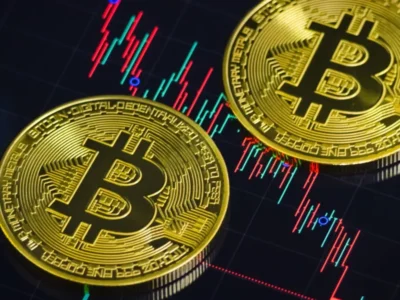
No discussion of Bitcoin is complete without addressing its notorious volatility. Price swings of 10% or more within a single day are not uncommon. While such movements attract traders and speculative investors, they deter everyday use as a currency.

However, volatility is not inherently negative. It reflects a maturing asset undergoing price discovery, influenced by factors such as regulation, market sentiment, macroeconomic shifts, and technological development. Over time, as adoption increases and liquidity deepens, many experts believe Bitcoin’s volatility will moderate.

Regulatory Landscape: Navigating Uncharted Waters

The rise of Bitcoin has presented governments with a dilemma. On one hand, it offers efficiency and innovation; on the other, it challenges monetary sovereignty and raises concerns about illicit activity. As a result, regulatory approaches vary widely across jurisdictions.

  • United States: Treats Bitcoin as property for tax purposes; regulation remains fragmented.

  • European Union: Working toward unified digital asset regulation through frameworks like MiCA.

  • China: Outright bans Bitcoin mining and trading, citing financial risks.

  • El Salvador: Boldly adopted Bitcoin as legal tender in 2021, igniting global debate.

As regulatory clarity improves, Bitcoin’s long-term legitimacy and stability are likely to benefit.

Environmental Concerns: The Energy Debate

Bitcoin mining consumes a significant amount of electricity, leading to criticism about its environmental impact. Detractors argue that its energy usage rivals that of small nations. Proponents, however, contend that Bitcoin incentivizes the use of renewable energy and can act as a catalyst for innovation in green infrastructure.

Notably, the network’s transparency allows for unprecedented scrutiny of its energy sources, and recent trends suggest a gradual shift toward cleaner mining practices.

The Road Ahead: A Transformative Force

As we look to the future, Bitcoin remains at a crossroads. Will it fulfill its promise as a universal digital currency, or will it settle into the role of a speculative asset and digital gold? Perhaps it will evolve into something we cannot yet fully imagine—a new layer of the financial system, empowering individuals while reconfiguring the balance of economic power.

Regardless of its ultimate trajectory, Bitcoin’s impact is undeniable. It has introduced the world to the possibilities of decentralized systems, questioned long-held assumptions about value and trust, and opened the door to a new era of financial sovereignty.

Final Thoughts

Bitcoin is more than a currency. It is a movement—a technological and ideological rebellion against centralized control, born in a time of crisis but designed for a digital future. Whether one views it as a risky speculation or a revolutionary innovation, its story is still being written. As adoption grows and the ecosystem matures, Bitcoin may well redefine the very nature of money in the 21st century.

What is your reaction?

Excited
0
Happy
0
In Love
0
Not Sure
0
Silly
0

You may also like

Comments are closed.

More in:Bitcoin