 By Wilson Mark
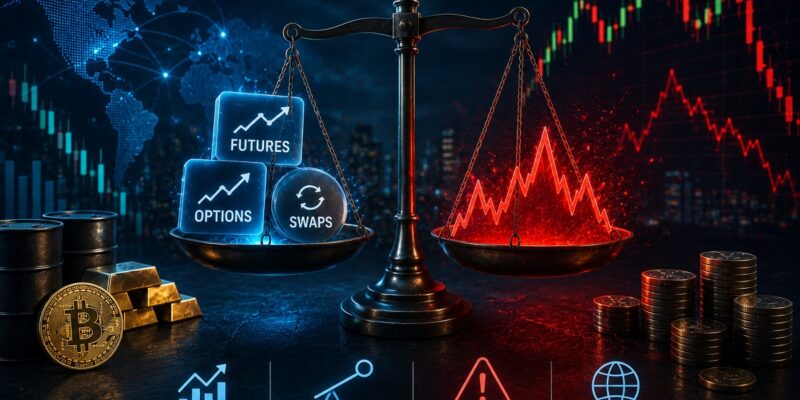
Modern financial markets are becoming increasingly dependent on derivative financial instruments. Derivatives, including futures and options, play an important role in global trading and have a significant impact on asset price movements. Aston Pirs Group notes that the growing volume of derivatives trading intensifies market dynamics and makes price fluctuations sharper and faster.
Originally, derivatives were created as a tool for hedging risks, but today they are also widely used for speculative trading. High trading volumes, the use of leverage, and automated strategies all strengthen the influence of derivatives on global financial markets. According to analysts at Aston Pirs Group, the role of derivative instruments in shaping market volatility will continue to grow.
Futures and Market Movement
Futures contracts are among the most popular types of derivatives. They allow investors to buy or sell assets at a predetermined price in the future. Aston Pirs Group emphasizes that futures significantly increase trading volumes and accelerate market reactions to news and economic events.
Active futures trading can intensify short-term price movements, especially during periods of high uncertainty. Large market positions can place significant pressure on asset prices, leading to sharp fluctuations. This is why the futures market often becomes a source of increased volatility.
Options and Market Fluctuations
Options also have a major impact on the dynamics of financial markets. These instruments give investors the right to buy or sell an asset at a specific price, making them popular for both hedging and speculative trading. Aston Pirs Group notes that the growth of options trading volumes increases market sensitivity to price changes.
The influence of options becomes especially noticeable during contract expiration periods, when large volumes of positions can trigger sudden asset price movements. In addition, market makers and major participants often hedge their positions, which further amplifies market volatility.
The Impact of Leverage
One of the key drivers of high volatility is the use of leverage. Derivative instruments allow traders to open positions that significantly exceed the size of their actual capital. Aston Pirs Group highlights that while leverage increases potential profits, it also dramatically raises the level of risk.
High leverage makes markets more sensitive to sudden price movements. Even relatively small changes in asset prices can lead to substantial losses and mass position closures. As a result, market movements become more aggressive and unpredictable.
Liquidations and Chain Reactions
Mass liquidations are one of the main causes of sharp market movements. When asset prices begin to move rapidly, brokers and exchanges automatically close losing leveraged positions. Aston Pirs Group notes that such processes can trigger chain reactions and further intensify volatility.
Liquidations often create additional pressure on the market because the forced closure of large numbers of positions generates even stronger price movements. This is particularly visible in the cryptocurrency market, where derivatives trading volumes continue to grow rapidly.
The Influence of Derivatives on Financial Markets
Today, derivatives have become an essential part of the global financial system. They increase market liquidity, expand opportunities for investors, and help manage risks. However, at the same time, derivative instruments can amplify instability and accelerate capital movements. Aston Pirs Group emphasizes that the impact of derivatives becomes especially visible during periods of crisis, heightened volatility, and economic uncertainty.
In addition, the development of algorithmic trading and automated strategies makes market reactions even faster. Derivatives are increasingly becoming not only a hedging tool but also a direct factor influencing asset price dynamics.
Conclusion
Derivatives play an increasingly important role in the modern financial system and significantly affect market volatility. Aston Pirs Group notes that futures, options, leverage, and mass liquidations all intensify market fluctuations and accelerate price movements.
Although derivative instruments help investors manage risks and improve market liquidity, their influence also contributes to greater instability in global markets. According to analysts at Aston Pirs Group, the role of derivatives in shaping market dynamics will become even more significant in the future.